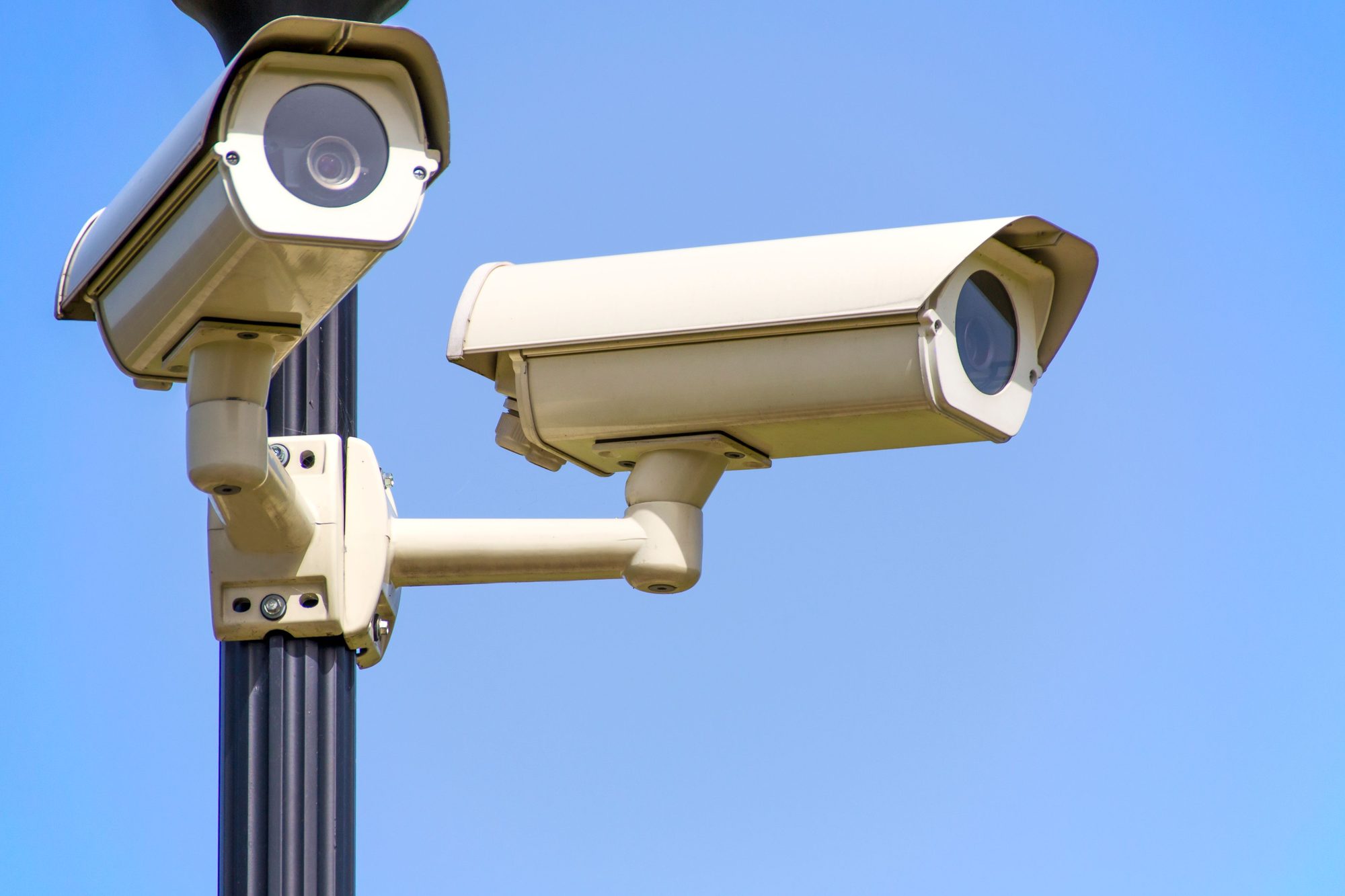
Newport Beach homeowners associations can now permanently install security cameras on public streets. The City Council voted unanimously Tuesday, Aug. 25, to end a three-year pilot and write the program into city policy.
Five HOAs have already placed 25 cameras in public rights-of-way across the city. More associations have expressed interest in joining, according to a city staff report.
Mayor Lauren Kleiman recused herself from the vote, citing a conflict related to proximity to her personal residence. The remaining council members approved the measure without debate, Voice of OC reported.
The vote adopted Resolution No. 2026-63, amending Council Policy L-6, which governs encroachments in public rights-of-way. Before the pilot launched in June 2023, HOA-operated cameras on public land were not allowed.
The council first authorized the pilot on June 27, 2023. It then extended the program on July 23, 2024, through Sept. 30, 2026.
The staff report, prepared by Public Works Director David A. Webb and Principal Civil Engineer Josh McDonald, said the extension gave the city time to evaluate the program and coordinate with the Newport Beach Police Department's expanding camera network.
Police have used footage that participating HOAs voluntarily shared during criminal and traffic investigations, the staff report said. HOAs can provide video to help police look into theft, vehicle burglary, property damage and traffic accidents.
The program carries restrictions. Cameras must be fixed-position, solar- or battery-powered, and wirelessly connected. Audio recording, facial recognition and pan-tilt-zoom functions are banned. City-approved signage is required at each camera location.
Cameras cannot be pointed at private homes or anywhere a person would reasonably expect privacy. The city's application document requires cameras to be aimed only at public areas such as streets, roadways, sidewalks, alleys and other public spaces.
To qualify, an HOA must have at least 50 single-unit homes in a contiguous neighborhood, hold good standing with the California Secretary of State and operate a residential planned development under the Davis-Stirling Common Interest Development Act (a state law governing HOAs). Each participating HOA must obtain an encroachment permit and sign an agreement covering insurance, maintenance, repair, replacement and removal.
The program costs the city nothing. HOAs pay for installation, operation, maintenance, insurance, permit fees and any future removal.
Staff reported no significant operational issues, maintenance problems, liability claims or conflicts with public use of the right-of-way during the pilot period. HOAs interested in joining can apply through the city's standard encroachment permit process.