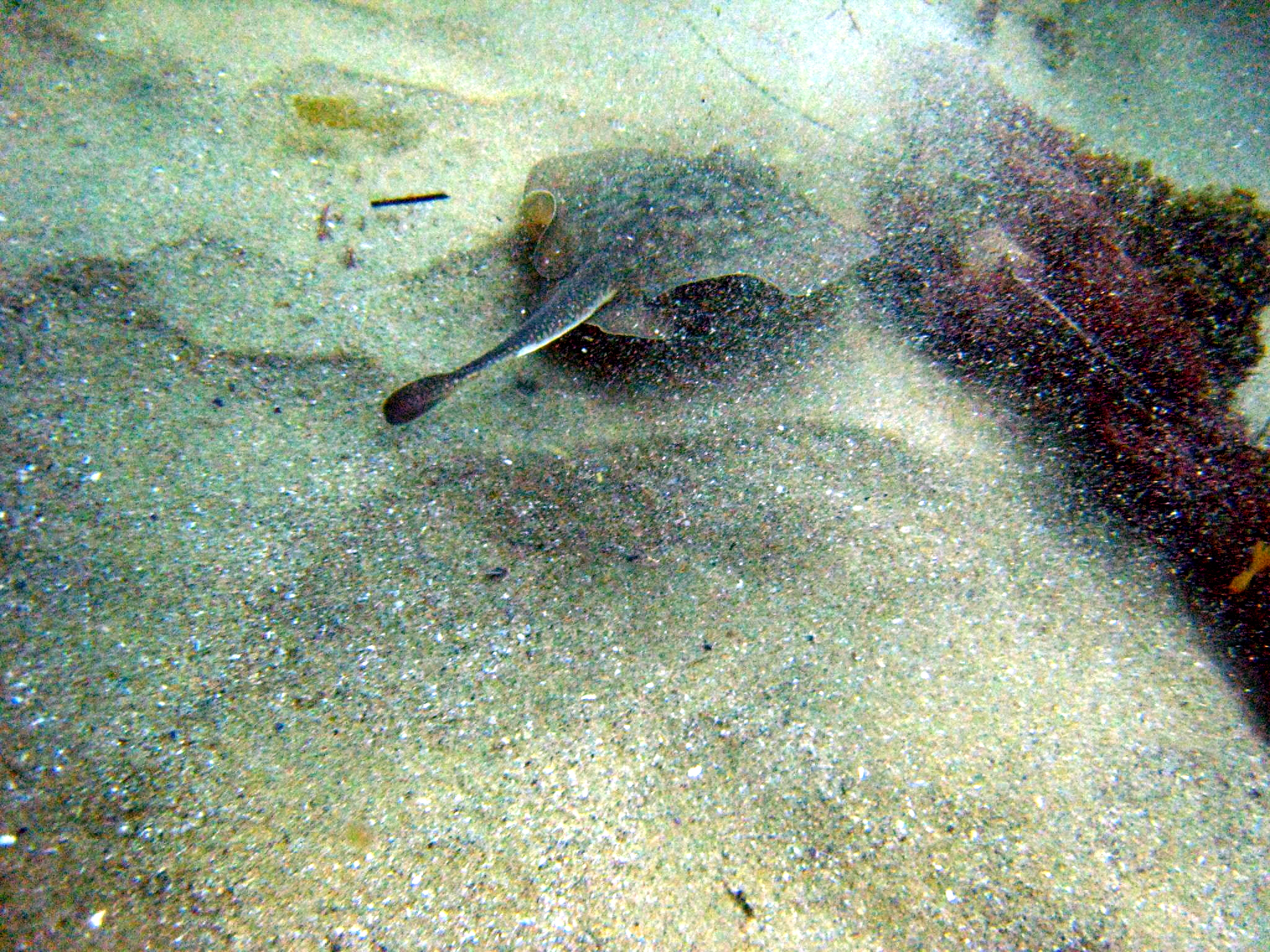
Newport Beach's 6.2 miles of ocean coastline sit squarely in the path of a stingray surge that has broken records at neighboring beaches this summer, driven by a marine heat wave that kept water temperatures in the 60s all winter long.
No Newport Beach-specific stingray numbers have been released for 2026, but the conditions fueling the spike are identical along the Orange County coast. Bolsa Chica State Beach and Huntington State Beach, just a few miles up the sand, have logged more than 3,100 stingray incidents so far this year, double the total for all of 2025, according to Patch. Huntington Beach's 3.5-mile stretch alone has exceeded 2,000 incidents, already surpassing last year's full-year count.
"We're definitely seeing an increase," state park Superintendent Bryan Etnyre told the Associated Press. "A lot of it is due to warming ocean temperatures that are consistently staying in the '60s. I don't think there was a week all winter where we dropped below 60 this year."
The 2026 event is only the third time on record that such a large section of California coastal waters stayed warm for so long, according to NOAA data cited by KTLA.
Newport Beach lifeguards already stretched
Newport Beach Lifeguard Chief Brian O'Rourke told the Orange County Register on July 28, during a dangerous surf advisory tied to Hurricane Genevieve: "Our lifeguards, we've been busy. We've had a very active summer." The stingray surge adds another hazard to an already demanding season for a department that handled 3,911 rescues in 2025.
The department is fully staffed with 224 lifeguards this summer, O'Rourke said in a July 5 interview with the Newport Beach Indy, including 96 assigned to towers, truck patrols and rescue boats. Newport Beach beaches draw up to 8 million visitors a year, according to the fire department's annual report.
Why the surge is happening
Chris Lowe, director of the CSULB Shark Lab, told KTLA that Southern California is the "stingray capital of the world." The round stingray population has grown over 50 years as large predators like sharks, giant sea bass and sea lions have declined, according to Shark Lab research.
Round stingrays move closer to shore when surf is calm and water is warm. Huntington Beach Fire Department Battalion Chief Derek Peters reported 240 stingray incidents in the past month and 80 in the past week as of Aug. 21.
"When that happens, stingrays come to the shore, and the weather gets warmer, and more people come to the beach," Seal Beach Marine Safety Lt. Nick Bolin said, describing how declining surf and rising temperatures create ideal conditions for encounters. In San Diego, lifeguards have treated 1,207 stingray injuries so far this year, roughly 200 more than the same point last year.
How to protect yourself
Lifeguard officials recommend the "stingray shuffle": slide your feet through the sand rather than stepping, sending vibrations that alert buried rays to move away.
If stung, soak the affected area in hot fresh water (104–113°F) for 30 to 90 minutes to break down the venom and reduce pain, according to California State Parks. Seek medical attention if the wound is deep, bleeding heavily, shows signs of infection or triggers an allergic reaction. Do not apply alcohol, urine or ammonia.
Peters reported that the weekly incident count at Huntington Beach jumped from 240 over the past month to 80 in just the last week, a pace that suggests the peak has not yet passed.