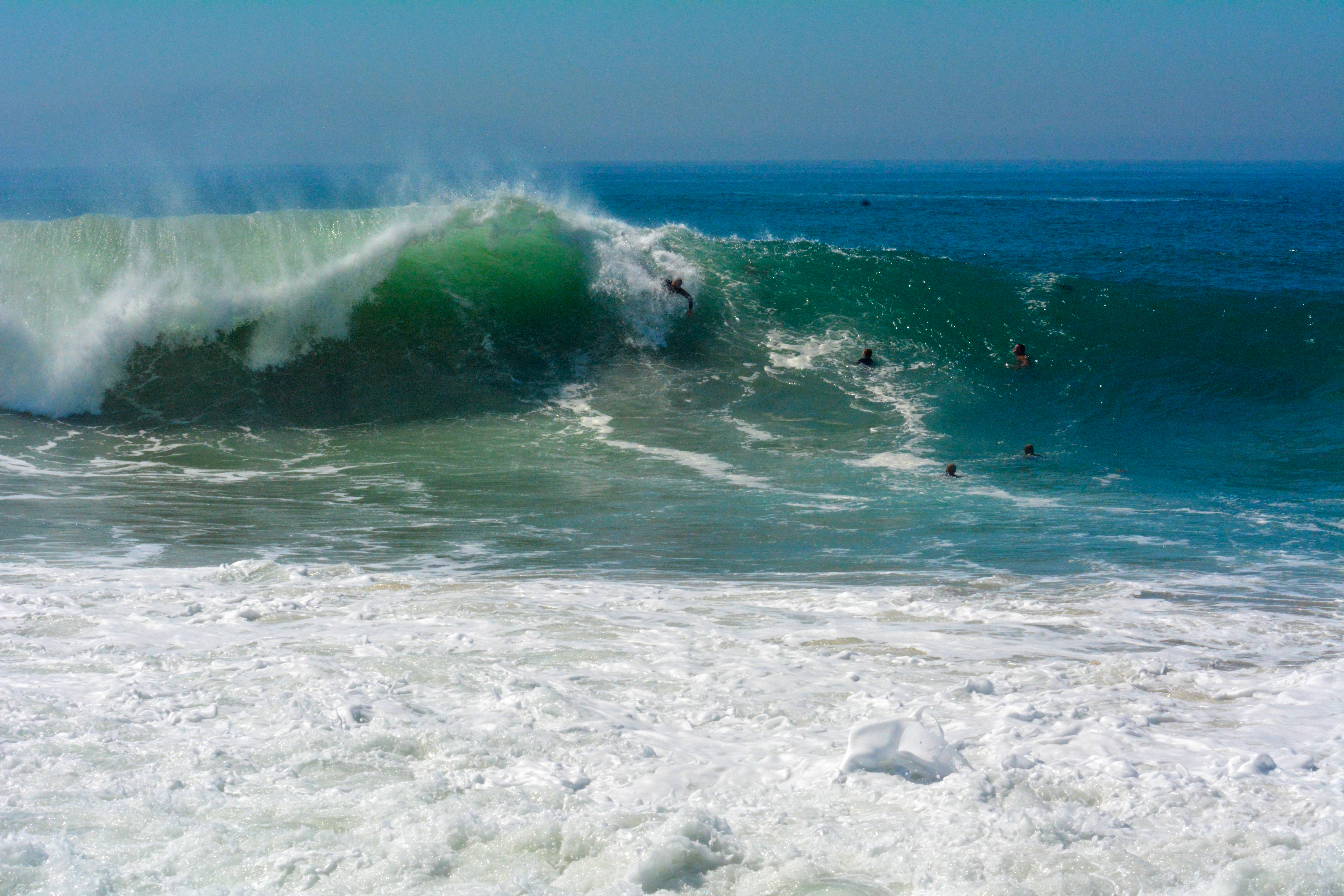
Coastal erosion at The Wedge has grown dangerous enough that the city has roped off sections of the beach with yellow caution tape, and the Newport Beach City Council will vote Tuesday, Aug. 25, on whether to launch a formal study session to find solutions.
Councilmember Erik Weigand, who requested the agenda item, described cleanup efforts as futile. "It's a losing battle. The next swell: more rocks come out," Weigand told the OC Register. He said at least two people have already suffered bloody facial injuries from exposed rocks.
As we reported Aug. 19, hurricane-driven swells from the Pacific stripped sand from the shoreline north of the Newport Harbor entrance, uncovering PVC pipes, electrical wires, a railway tie, metal bars and barbed wire buried since the 1920s–1940s.
Since then, conditions have deteriorated. The "pit" at the base of the rock jetty where generations of bodysurfers gathered has vanished entirely. The lifeguard tower has been pushed farther back than longtime regulars can remember. At higher tides, the ocean now reaches a cement walkway recently installed for ADA access.
Kevin "Mel" Thoman, who has bodysurfed The Wedge for more than 50 years, told the OC Register the erosion is the worst he has ever seen. The trouble started with an unusually early south swell in March, he said, and three Pacific hurricanes since July, including Fausto and Genevieve, have deepened the damage.
Sand is available. Getting it there is not.
The city has identified potential sand sources: material in Anaheim with unknown cost and quality, sand at Prado Dam available only September through November due to permitting windows, and sand scooped from the harbor entrance mouth. But any replenishment project requires federal permits through the Army Corps of Engineers.
Public Works Director Dave Webb told the OC Register in June that the process would be difficult, saying he wasn't sure where the city would source the sand or how it would navigate a new round of regulatory permitting.
The federal bottleneck is not new. The Army Corps estimates Orange County beaches lose roughly 350,000 cubic yards of sand annually. A 1962 congressional law obligates the federal government to help replenish those beaches, but permitting and funding shortfalls have left the region with a deficit of about 5.2 million cubic yards. The Surfside Sunset Beach Sand Replenishment Project, which is supposed to send sand south to Huntington and Newport every five to seven years, has been completed only once since 2009.
John Kriss, president of the Surfside Colony Storm Water Protection District in Seal Beach, told the OC Register the shortfall has put people and property in danger and called for action before conditions worsen further.
Hard armoring, such as placing large boulders on the beach, is not a simple fix either. It can change how waves hit the shoreline, pulling sand away rather than letting it ease up a sandy slope, according to the OC Register's reporting.
Tuesday's council vote will not include debate. It will set in motion a study session aimed at finding workable solutions before winter swells arrive.