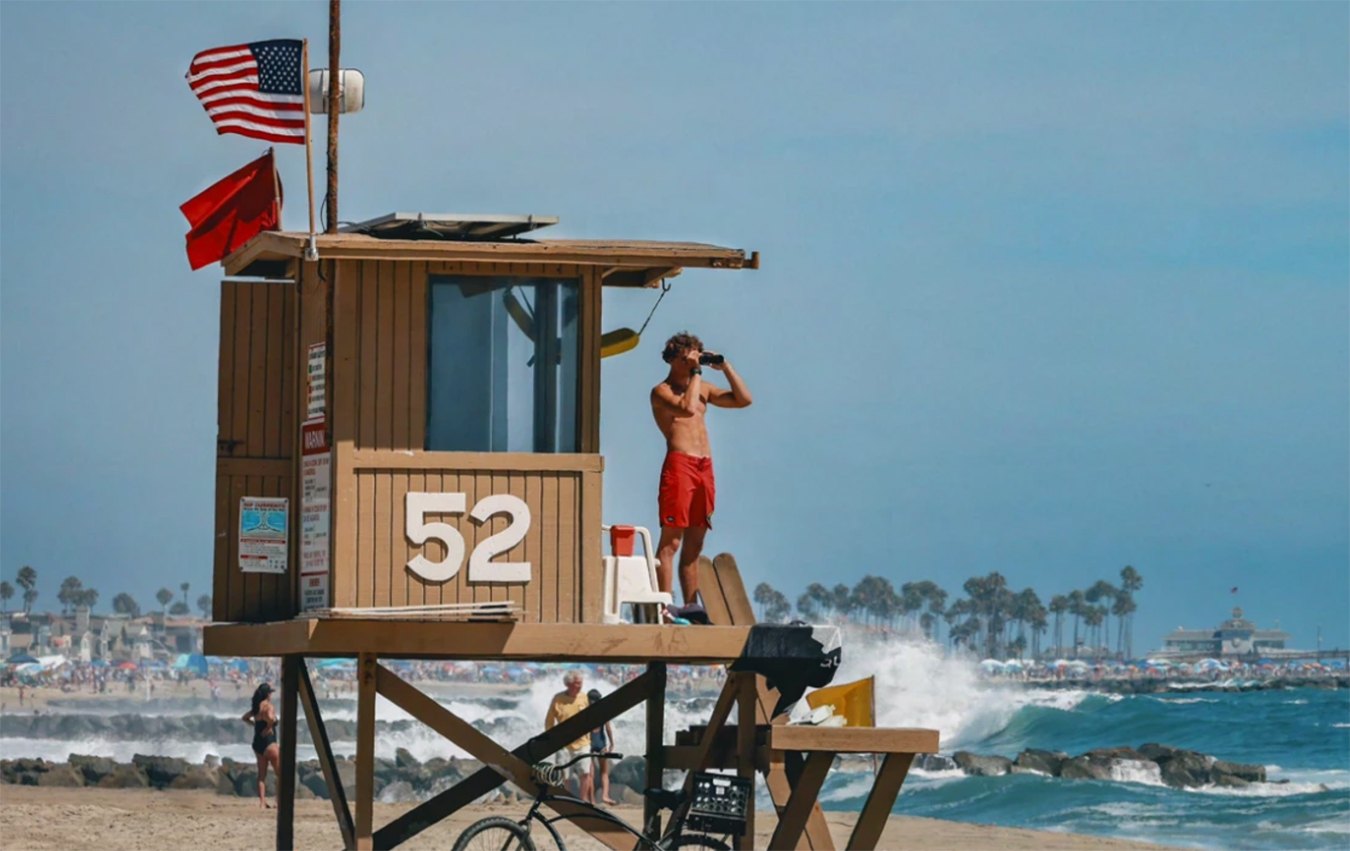
Newport Beach has 224 lifeguards patrolling eight miles of coastline this summer, and Chief Lifeguard Brian O'Rourke says they're going to need every one of them.
The department rescued 3,911 people in 2025, up from 3,071 in 2024. On high-surf days, that number can spike to 50 to 300 rescues in a single day, according to Newport Beach Fire Department public information officer David Gibson. The Wedge, where waves refract off the rock jetty and double in size, has already produced what the OC Register described as the biggest summertime swell in two decades. In early June, sets reached 20 feet.
"The kid was severely exhausted and scared," O'Rourke said of one June rescue at the Wedge. "We had four people pulling him out. The surge and the backwash near shore was so extreme, it was hard for them to get out of the water."
Broken Styrofoam from shattered bodyboards is a common sight on the sand there. Bodysurfer Sean Starkey told the OC Register that erosion has exposed rock boulders longtime Wedge visitors have never seen before, adding another hazard for anyone entering the water.
The numbers behind the operation
Of the 224 guards on duty, 96 are assigned to towers, truck patrols and rescue boats. Another 53 staff the Junior Lifeguard Program weekly, and 75 serve as reserves. New hires must complete 109 hours at the city's Lifeguard Academy before they qualify. Returning guards face 16 hours of recertification, including a 1,100-yard ocean swim.
The department has held Advanced Agency status with the U.S. Lifesaving Association since 1997. It covers 25 square miles of ocean and handles up to 100,000 visitors on a peak summer day.
Over a 10-day stretch from June 6 through June 15, lifeguards logged 12,104 preventive actions and 516 rescues, according to battalion chief Adam Yacenda. By comparison, the department recorded more than 350 rescues during a weeklong period around the Fourth of July in 2025.
What the flag system means
Every lifeguard tower flies a colored flag indicating conditions:
- Green: Small waves, possible rip currents.
- Yellow: Moderate conditions, larger waves and rip currents.
- Red: Hazardous. Large waves, expert swimmers only.
- Black ball: No surfboards or skim boards due to crowds. Bodyboards are allowed everywhere except the Wedge.
Staying safe
Rip currents can move at eight feet per second and account for the majority of ocean rescues nationwide, according to the U.S. Lifesaving Association. Gibson urged swimmers to stay at least 100 feet from piers and jetties, swim near a lifeguard tower, and learn to escape a rip current by swimming parallel to shore until free of the pull, then angling back to the beach.
O'Rourke's advice for anyone eyeing the Wedge: "Know your limits. Don't go out when in doubt. Make sure you are watching from afar. Stay off the rock jetties."