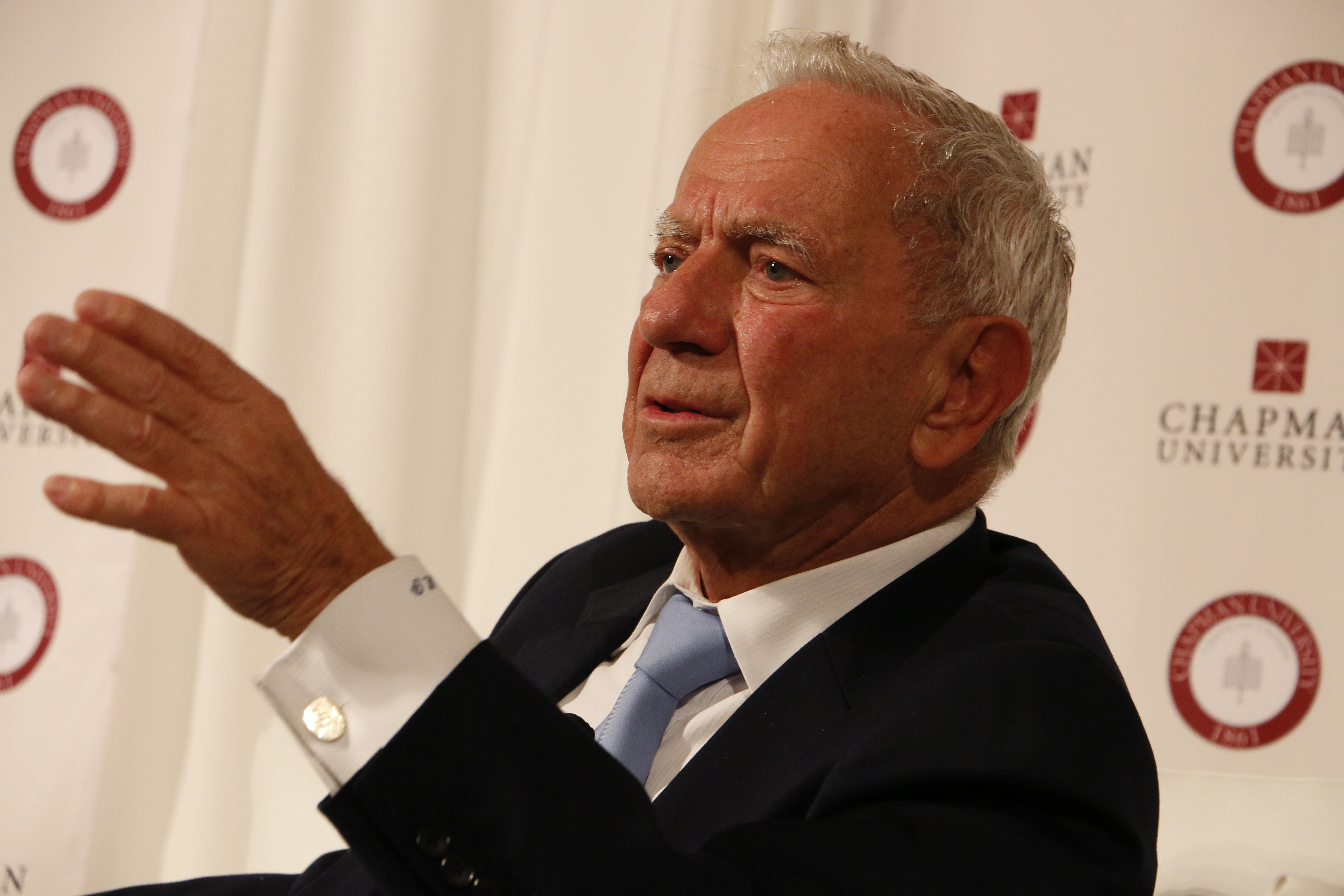
Milan Panić, the Newport Beach pharmaceutical executive who led ICN Pharmaceuticals and served as Yugoslavia's prime minister, died Thursday, Sept. 24, in Pasadena. He was 96.
His death was first reported by the Orange County Business Journal. His family confirmed it through an online memorial, describing him as larger than life. No cause of death was disclosed. Memorial service details had not been announced as of Monday, Sept. 28.
Born in Belgrade on Dec. 20, 1929, Panić joined the Yugoslav resistance as a teenager during World War II. After the war he became a champion cyclist, competing on Yugoslavia's national and Olympic teams.
In August 1955, while traveling to a cycling tournament in the Netherlands, Panić and his first wife, Jelica, defected. They sought asylum in West Germany, lived in a refugee camp and reached Fontana, California, in early 1956 with two suitcases and little money.
Three years later, Panić launched International Chemical and Nuclear Corporation, later known as ICN Pharmaceuticals, from a garage near Los Angeles with about $200 in startup capital. He moved operations to a research lab in Costa Mesa as the company grew. ICN listed on the New York Stock Exchange in 1967.
In 1972, ICN chemists helped discover ribavirin, a broad-spectrum antiviral compound. The drug won FDA approval in 1985 for treating respiratory syncytial virus (RSV) in children and later became a cornerstone of hepatitis C treatment. At its peak, ICN reported more than $672 million in annual sales across 90 countries.
Panić's life took its most dramatic turn in July 1992. At the invitation of Yugoslav President Dobrica Ćosić, the American businessman became prime minister of the Federal Republic of Yugoslavia during the Balkan wars. He addressed the Federal Assembly in English, with a pronounced American accent.
"The question facing this assembly is more peace or more war," he told lawmakers, according to Srpske Novine.
That December, Panić challenged Serbian President Slobodan Milošević in a presidential election. Running as an independent with just three weeks to campaign, he collected more than one million votes. He finished second with roughly 32% of the vote. International observers alleged media bias and vote tampering by the ruling party. Milošević's government ousted Panić from the premiership in February 1993.
The Wall Street Journal Europe named Panić its European of the Year in 1992 for his reform and peace efforts. He had received the Ellis Island Medal of Honor in 1986.
Back in Orange County, Panić ran ICN for 43 years before departing in June 2002. The company later became Valeant Pharmaceuticals and ultimately Bausch Health. He went on to found MP Biomedicals, headquartered in Santa Ana, which he sold in October 2015.
Panić is survived by his wife, Alexandra, children Dawn, Vickie, Spencer, Tim and Alex, grandchildren Yasin, Yusra, Mathew and Andrea, and great-grandchildren James, Luke and Gabriella. The family has asked for privacy and invited people to share memories on the memorial page.